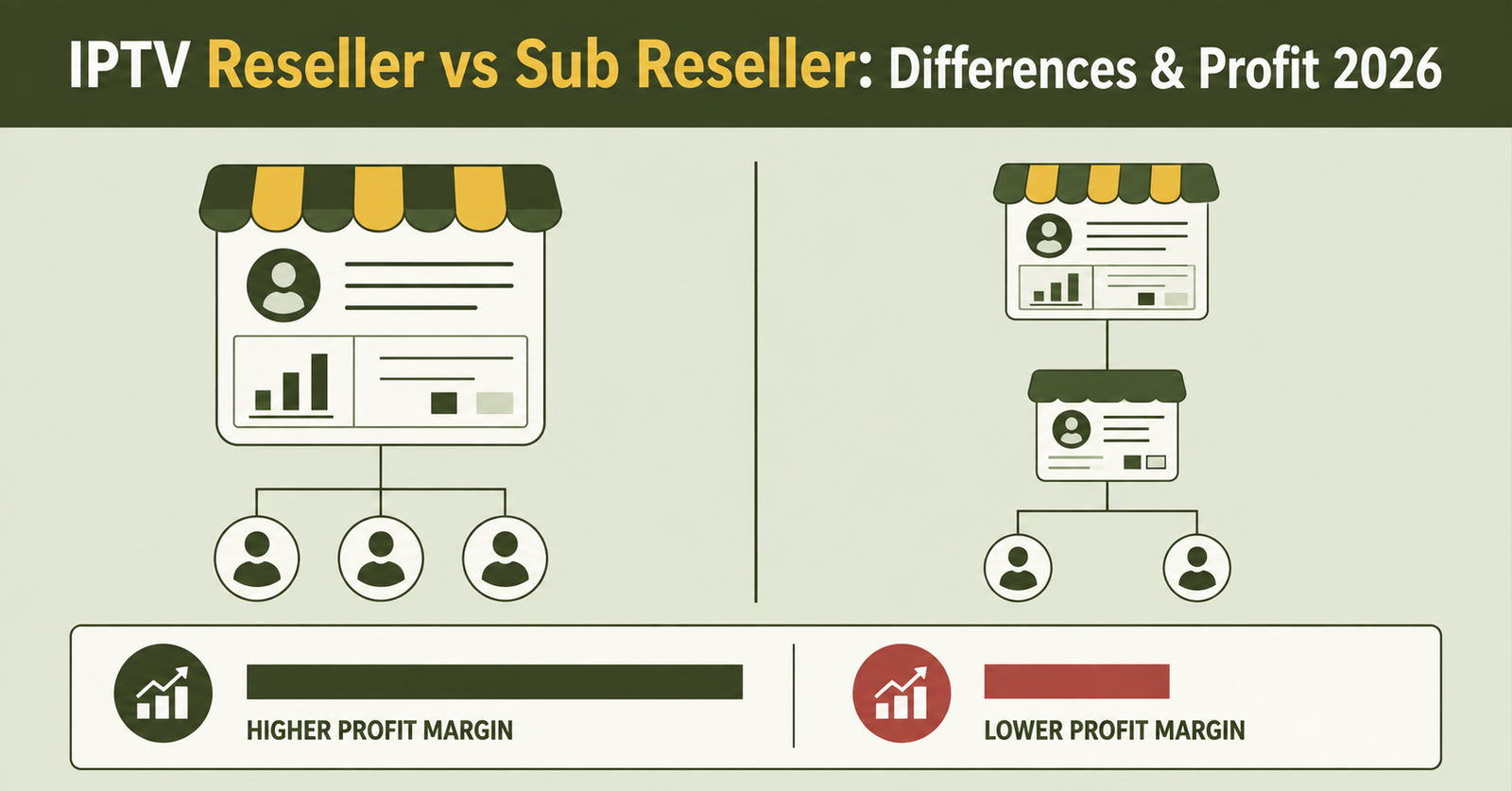
IPTV Reseller vs Sub Reseller comes down to one thing: whether you own the credit line directly or you’re borrowing space inside someone else’s account. A UK IPTV reseller buys credits straight from a panel provider and answers to nobody else for stock. A sub reseller buys a slice of credits from an existing reseller’s account and inherits whatever pricing, permissions and stability that person decides to offer. Both routes can make money. They just carry very different amounts of control and exposure.
IPTV Reseller vs Sub Reseller: What Actually Separates Them
The distinction isn’t really about effort or skill. It’s about where the account sits in the chain and who can pull the plug on it.
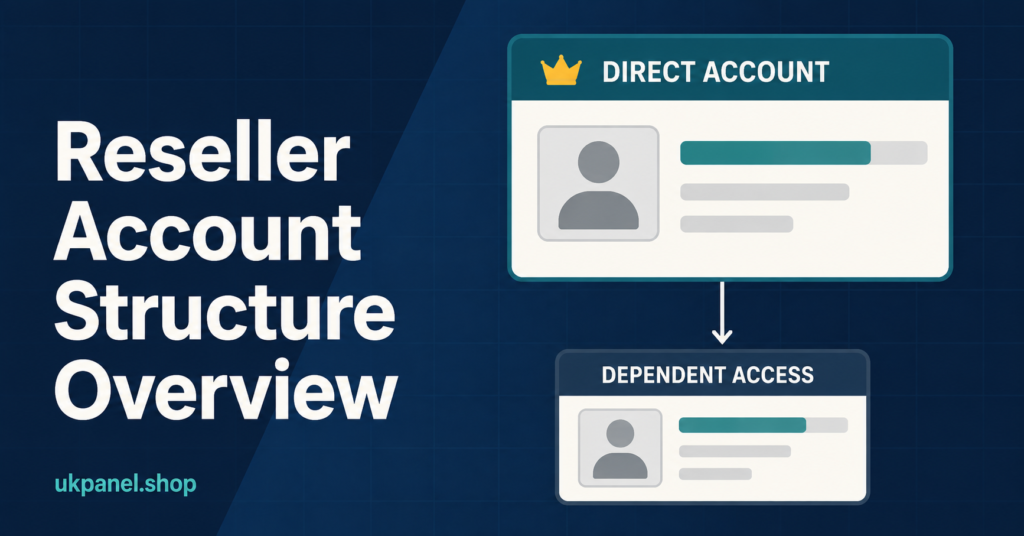
A reseller has a direct relationship with the panel or provider. Credits are bought at wholesale rate, the account is registered in their name, and pricing decisions belong entirely to them. A sub reseller sits one layer further down. Someone else has already opened the master reseller account, and the sub reseller buys a portion of that person’s credit allowance, usually at a price somewhere between wholesale and retail.
Pro tip: Before agreeing to a sub reseller arrangement, ask to see the reseller’s own uptime and support history. You’re inheriting their reliability, not just their pricing.
Where Your Money Actually Goes
Margin is usually the first thing people compare, and it’s where the gap is biggest.
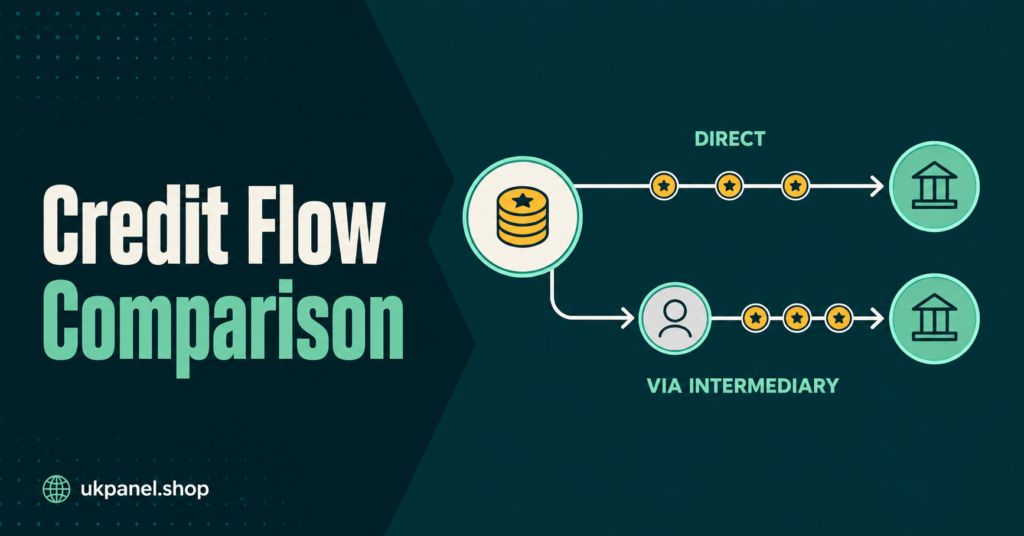
As a reseller, you’re paying wholesale directly to the source. Whatever markup you add when selling to customers is entirely yours to keep, minus the cost of the credits themselves. Bigger credit bands typically bring the per-credit price down further, which rewards volume and consistency over time.
A sub reseller pays a middle price. The reseller above you has already taken a cut before you even see the credit, so your margin is thinner unless you charge customers more to compensate. That’s not automatically a bad deal. It removes the need to commit a large amount of money upfront, and it lets someone test the business without buying a full credit band they might not use.
Control You Get, and Control You Don’t
This is the part people underestimate until something goes wrong.
A reseller manages their own dashboard permissions, decides who else gets sub reseller access underneath them, and can adjust pricing without asking anyone. If a customer has an issue, the reseller deals with it directly through the panel.
A sub reseller usually works inside a restricted view of someone else’s dashboard. Line creation might be limited, credit top-ups might need to go through the parent reseller rather than a direct purchase, and support escalation often has to pass through that person first before it reaches the panel provider. Some parent resellers are responsive and fair about this. Others are slow, and a sub reseller has very little leverage to change that once they’ve committed customers to the platform.
The Risk Nobody Mentions
Every sub reseller relationship depends on one person staying reliable, solvent and reachable.
If the reseller above a sub reseller closes their account, stops paying for the panel, or simply disappears, every sub reseller underneath them loses access at the same time, along with every customer line that was built on it. There’s no separate contract with the panel provider protecting a sub reseller in that situation, because the panel doesn’t recognise them as a direct customer.
Resellers carry a different kind of risk. Because the account is theirs, they’re fully responsible for keeping it funded, keeping support responsive, and making sure credits don’t run out mid-renewal. It’s more exposure to manage, but it’s exposure they control rather than exposure created by someone else’s decisions.
Explore how a reseller dashboard actually works
Which Setup Fits Your Situation
Neither option is universally better. The right one depends on three things: how much you’re able to commit upfront, how much control matters to you, and how much you trust the person you’d be buying from if you go the sub reseller route.
Someone testing the market with a handful of friends or coworkers, without much capital to risk, often finds a sub reseller arrangement a sensible entry point. There’s less financial exposure and less to learn on day one.
Someone planning to build a genuine customer base, open their own sub reseller network, or set prices without checking with anyone else needs the direct reseller route. It costs more to start, but it removes the single point of failure that comes with depending on another account.
Pro tip: If you’re unsure which route to take, start as a sub reseller with a small batch of credits for one month. Watch how quickly issues get resolved before deciding whether to commit to a direct IPTV Panel reseller account.
Operational Differences That Show Up Later
A few practical gaps only become obvious once the business is running, not at the point of signing up.
Resellers can usually access detailed activity logs across every line and every sub reseller beneath them, which makes spotting a stuck connection or a suspicious spike in usage much faster. Sub resellers often see only their own slice of that data, which means diagnosing a customer complaint sometimes means waiting on someone else to check the wider account.
Renewal automation is another one. A reseller can usually set reminders and automated renewals across their entire book. A sub reseller’s ability to do that depends entirely on what permissions the parent account has switched on for them.
Compare reseller credit pricing bands
Pro tip: Keep your own spreadsheet of customer renewal dates regardless of which setup you’re in. Don’t rely solely on dashboard permissions you don’t control.
IPTV Reseller vs Sub Reseller Questions, Answered
Can a sub reseller become a full reseller later?
Yes, most sub resellers can move up to a direct reseller account whenever they’re ready to buy a credit band straight from the provider. The switch usually means setting up a fresh account rather than upgrading the existing one.
Is a sub reseller account riskier than a reseller account?
It carries a different kind of risk rather than simply more of it. A sub reseller depends on someone else’s account staying active, while a reseller carries the full responsibility of keeping their own account funded and supported.
Do sub resellers get the same customer support as resellers?
Not always. Support often has to pass through the parent reseller first, which can slow things down compared with a reseller contacting the panel provider directly.
Which option makes more profit per customer?
Resellers generally keep a larger margin because they’re buying at wholesale rate. Sub resellers pay a middle price, so their margin per customer is usually smaller unless they adjust their own pricing to customers.
Do I need technical knowledge to be a sub reseller?
No more than a reseller needs. Both roles are commercial rather than technical, since the panel handles the underlying delivery.
Choosing between an IPTV Panel reseller and sub reseller setup shouldn’t come down to guesswork. If you can commit the upfront cost and want full control over pricing, permissions and support, a direct reseller account gives you that without depending on anyone else’s decisions. If you’re still testing demand or want to start with less financial exposure, a sub reseller arrangement can work, provided you trust the person whose account you’re relying on. Whichever route you take, check the reliability of the people or panel above you before you put a single customer on the line.
Decision Checklist
- Work out how much capital you can commit before choosing a credit band size
- Ask any potential parent reseller how long they’ve held their own account
- Check what dashboard permissions you’d actually get as a sub reseller
- Confirm whether credit top-ups can be bought directly or only through someone else
- Decide whether pricing control matters enough to justify the higher reseller cost
- Test the arrangement with a small number of customers before committing fully